Thursday, 23 November 2006

King Island Dairy Roaring Forties Blue

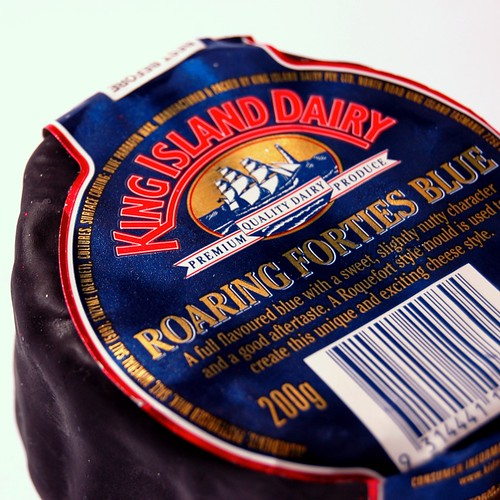
It's been quite remiss of me that in all the cheese I've shown so far, none have been blue cheese. What better way to redress the situation then to show the 2006 Champion of the 78th Annual British Empire Cheese Show held in Ontario, Canada. The cheese in question is the King Island Roaring Forties Blue.

king island roaring forties blue© by haalo


This is the second cheese I've shown from King Island Dairy - if you'd link a reminder, just follow this link. I should add that the name "Roaring Forties" refers to the gale winds that lash King Island - the island itself is situated at 40° latitude.
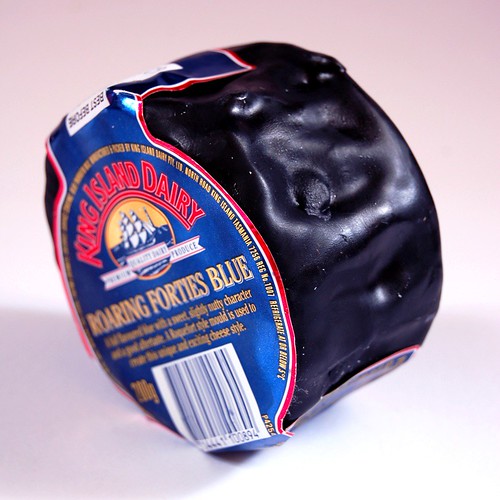
king island roaring forties blue© by haalo height=


Underneath the distinctive and knobbly blue wax you'll find a full flavoured rind-less cheese made from pasteurised cows milk and inoculated with Roquefort style moulds. After four to five weeks of maturation, the moulds have developed inside the cheese and it's then dipped in that dark blue wax. In it's oxygen deprived state, the moulds stop developing and the milks sweet and nutty characteristics appear.
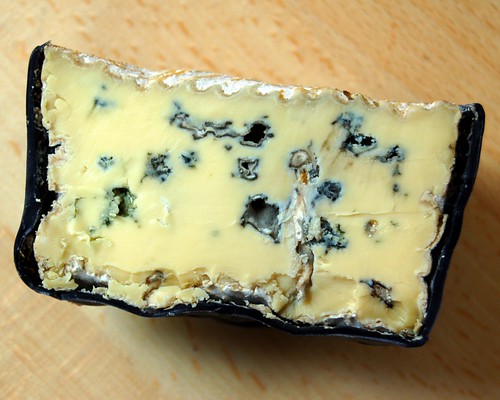
king island roaring forties blue© by haalo


When sliced you'll notice that it's not as heavily veined as a Gorgonzola - it's more the case of having pockets of blue. The cheese is quite creamy and not overly salty and has an excellent mouth feel - there's a good length of flavour in the palette.

I'd class this as the type of Blue you'd give to someone who is a bit unsure of the whole "blue cheese" thing. It's appearance isn't overly confronting and there's enough blue free bits to tempt the most cautious. It's certainly a cheese to consider for that Christmas cheese platter.

Originally published here

Tuesday, 24 October 2006

Holy Goat Ripe Pandora

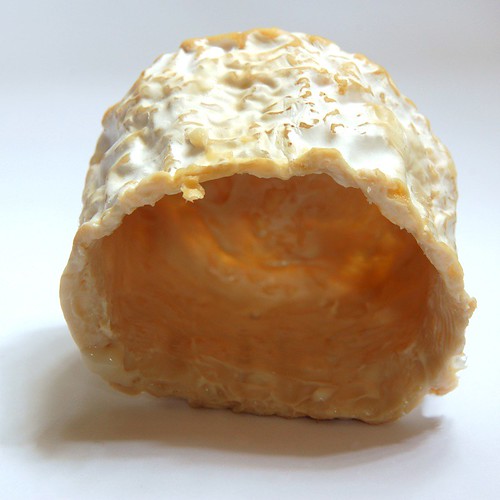
Holy Goat was the subject of my first cheese post so I thought it might be time to return and highlight another cheese from their range - the intriguingly named Pandora. You'll find upon opening this Pandora, that only good things lie inside.

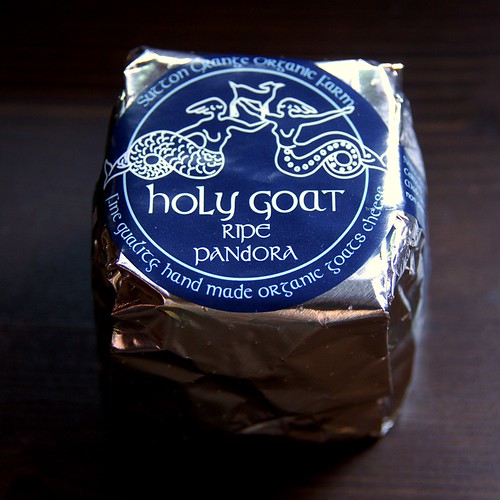
holy goat ripe pandora© by haalo

Cheese: Holy Goat Ripe Pandora
Location: Sutton Grange Organic Farm, Victoria

As mentioned previously, Holy Goat is located at Sutton Grange, in central Victoria around Bendigo, at the foothills of Mount Alexander. It's an organic farm and the milk is obtained solely from their own goat herd which is a cross of British Alpine and Swiss Saanen goats. The cheese is made using traditional farmhouse techniques and based on French soft curd styles.

Once you pick up the packet you'll immediately notice quite a bit of give - an almost jelly like sensation. It's very similar in feel to the Udder Delights Goat Camembert.

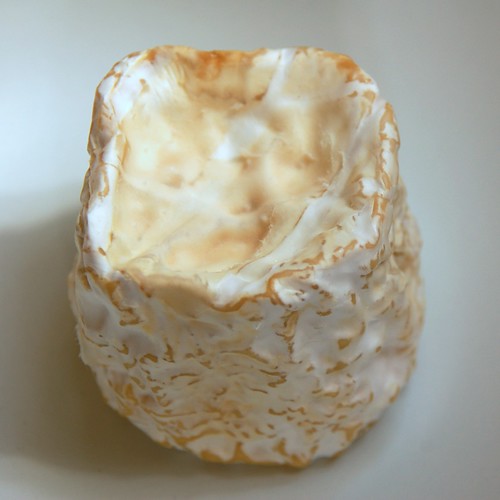
holy goat ripe pandora© by haalo

Once removed from it's silver wrapper, it looks quite normal - but looks in this case are deceiving.

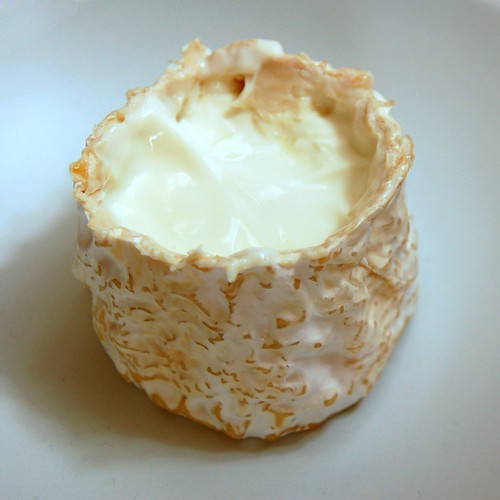
There is only one way to eat this cheese. Whatever you do - don't approach it like a regular cheese. To get inside, you must cut out a lid - simply run the knife around the top edge to reveal the contents.

holy goat ripe pandora© by haalo

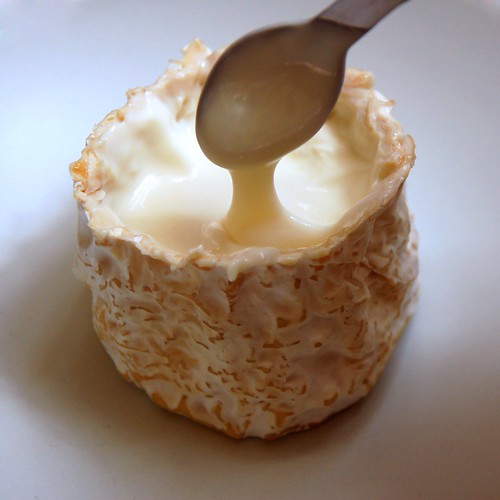
You do not eat the rind - it's merely the vessel that contains the gloriously viscous cheese that you spoon out and savour.

holy goat ripe pandora© by haalo

Creamy, without any of those bitter goat elements, rich without being cloying, it's a cheese you can enjoy without any feelings of bloating. You just might find yourself scraping the sides to ensure you've garnered every morsel.

holy goat ripe pandora© by haalo


Originally published here

Friday, 6 October 2006

Mungalli Creek Ricotta

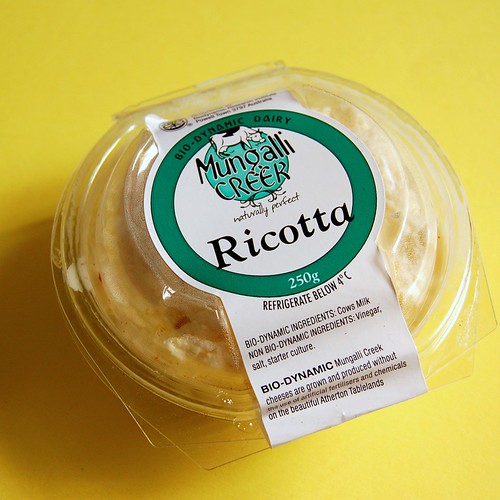
Mungalli Creek is a bio-dynamic dairy located in far north Queensland and they produce a range of products that include milk, yoghurt, cheese and dips. The cheese I'm looking at today is one that is very well known to Italians - Ricotta!

mungalli creek ricotta© by haalo

Cheese Maker: Mungalli Creek
Cheese Name: Ricotta
Location: Brooks Road, Millaa Millaa

Mungalli Creek has a tasting and tea room called Out of the Whey and it's open daily from 10am-4pm.

The dairy uses bio-dynamic practice as developed by Dr Rudolph Steiner in the 1920's. While they don't use artificial chemicals or fertilisers they do use something called Preparation 500. This is basically manure packed into corn horns and buried over winter. The manure converts into colloidal humus and is said to help develop soil structure and encourage worms and other soil micro-organisms. With healthy soil you get healthy feed and in turn healthy cows.

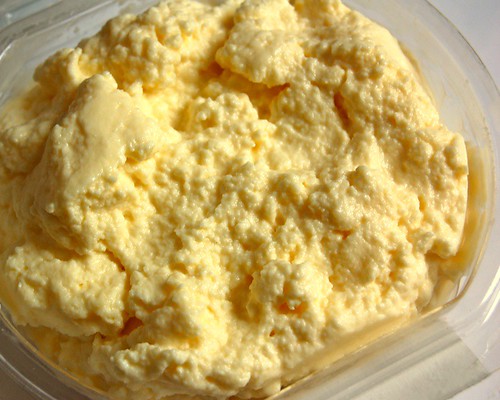
I often used Ricotta in recipes on this blog and have always stressed the important of avoiding those bland supermarket tubs of substances that bear no real resemblance to ricotta. While I am a supporter of the basket pressed delicatessen versions, this type of ricotta is something I use when I just want to enjoy the cheese as it is. I think is as close as you can get to ricotta you've made yourself.

mungalli creek ricotta© by haalo

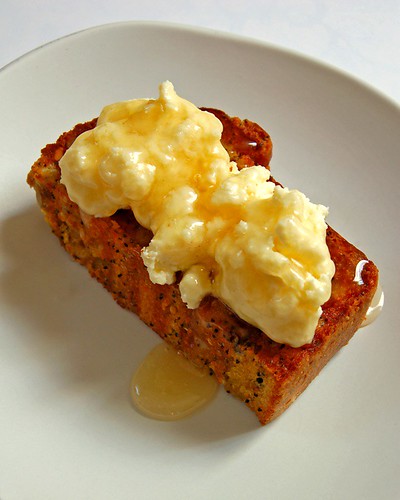
It's gorgeously dense and the colour of double cream - you can't help but spread it thickly on some toasted bread - which is exactly what I did, using the Seeded Orange Soda Bread.

seeded orange soda bread with ricotta© by haalo

Thickly sliced and grilled until golden, a thick layer of creamy ricotta and for sweetness, a generous drizzle of honey. A slightly decadent way to start the day.

Originally published here